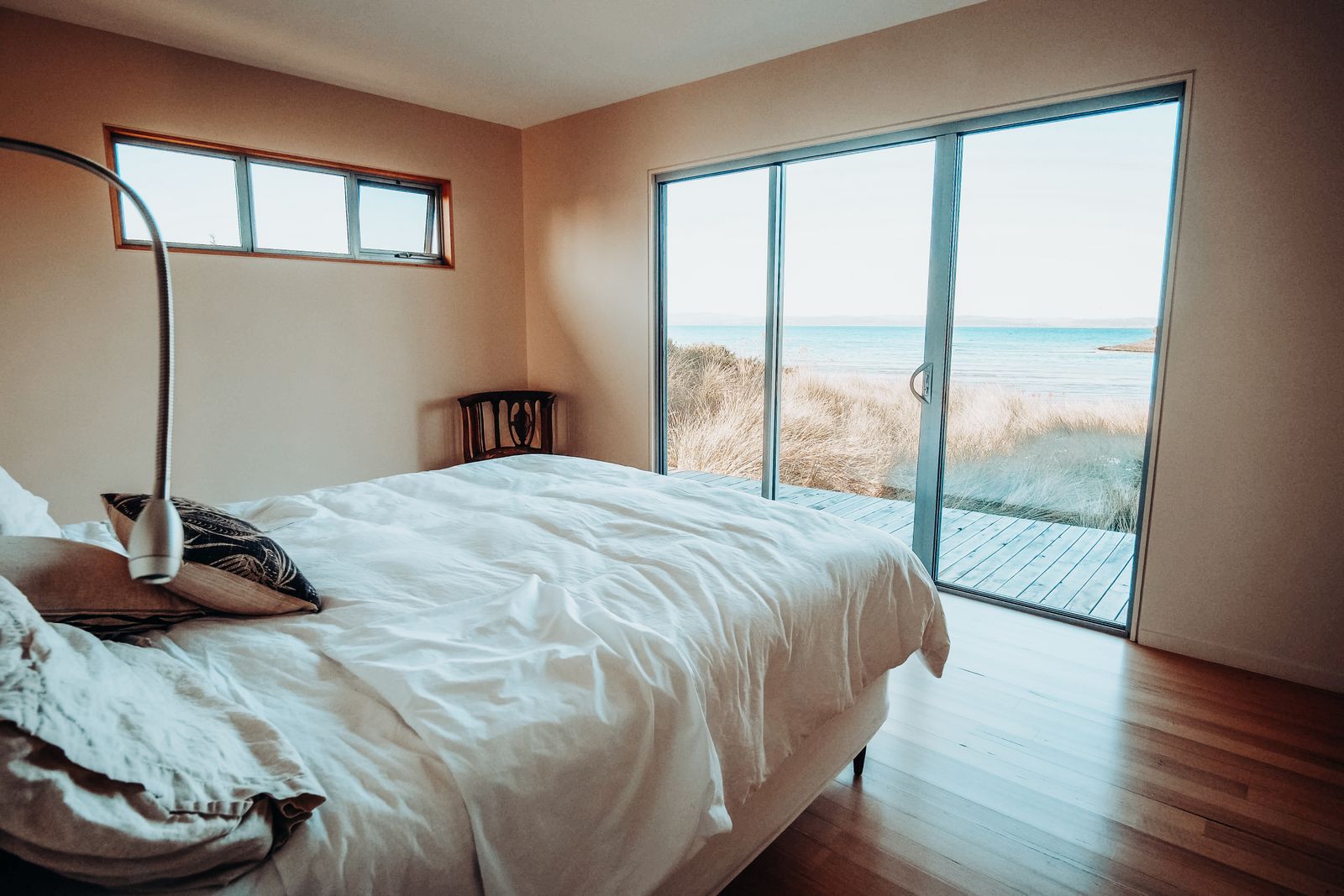
The short answer: a calm coastal bedroom comes from texture, natural materials, and serious light control, not from anchors, rope knots, or a sign that says Beach House. The house already knows where it is. In Naples, the sun through a west-facing window at 5 p.m. does more decorating than any seashell ever could. The work is editing the room so it feels like the coast instead of announcing it.
Key takeaways
- Drop the theme, keep the feeling. Driftwood-toned wood, woven fiber, and washed linen imply the shore; motifs declare it, and declaring it dates the room fast.
- Retire the blue-and-sand default. A more current coastal palette runs sea-glass green, fog gray, latte, soft clay, and blush layered over warm whites.
- Light control is the Florida-specific job. Naples posts highs in the 80s every month of the year, so pair sheers for daytime glare with blackout drapery or shades for sleep.
- Invest in bedding you can feel: washed linen and crisp cotton breathe in humidity and look better rumpled than pressed.
- Mix wood tones instead of buying the matched distressed-white set. One woven statement per zone, not five.
- Layer lighting on dimmers with warm bulbs. A single overhead fixture flattens every texture you paid for.
Skip the theme, keep the feeling
The fastest way to make a bedroom feel less like the coast is to fill it with coastal objects. Bedding retailer Castle Home’s guide to coastal clichés puts the first rule bluntly: no anchors, rope, or seashell overload, and no ship wheels “unless you own a literal boat.” The alternative is material honesty. A driftwood-toned lamp base, a woven basket, an imperfect clay vase on the nightstand: these hint at the shore the way the real shore does, through texture and light rather than iconography.
This is the same discipline that separates good coastal living rooms from souvenir shops, and we covered the room-by-room logic in our coastal interior design guide. In the bedroom the stakes are higher, because the room’s whole job is calm. Every themed object is a small piece of noise.
A palette with more range than blue and sand
Blue and sand is not wrong. It is just finished, in the sense that it has nothing left to say. Castle Home’s styling team suggests a more refined register: sea-glass green, foggy gray, blush, latte, and soft clay. Those tones still read coastal, but they read boutique hotel rather than boardwalk rental. They also flatter the specific light here. Naples sun is bright and warm for most of the year, and cool grays that look sophisticated in northern light can go dingy under it, while warm neutrals glow.
The other palette mistake is bright white everything. White needs company. Layer soft whites against sandy taupe, gray-blue, or muted green, and vary the sheen: matte walls, washed cotton, a nubby knit throw. The room should have dimension at noon and depth at night.
| The cliché | The swap | Why it works |
|---|---|---|
| Anchor and rope motifs | Driftwood tones, raw ceramics, woven baskets | Texture implies the coast without naming it |
| Blue-and-sand everything | Sea glass, fog gray, latte, soft clay, blush | Softer contrast reads current and calmer |
| Matched distressed-white furniture set | Mixed wood tones, one white oak piece, matte black accents | Feels collected instead of ordered from one catalog |
| Printed beach-motif bedding | Washed linen or crisp cotton in solids | Breathes in humidity and improves with washing |
| Sheer curtains alone | Sheers layered with blackout drapery or shades | Daytime glow, real darkness for sleep |
| One overhead light | Lamps, sconces, a woven pendant, dimmers | Warm layered light flatters texture at night |
Texture does the heavy lifting
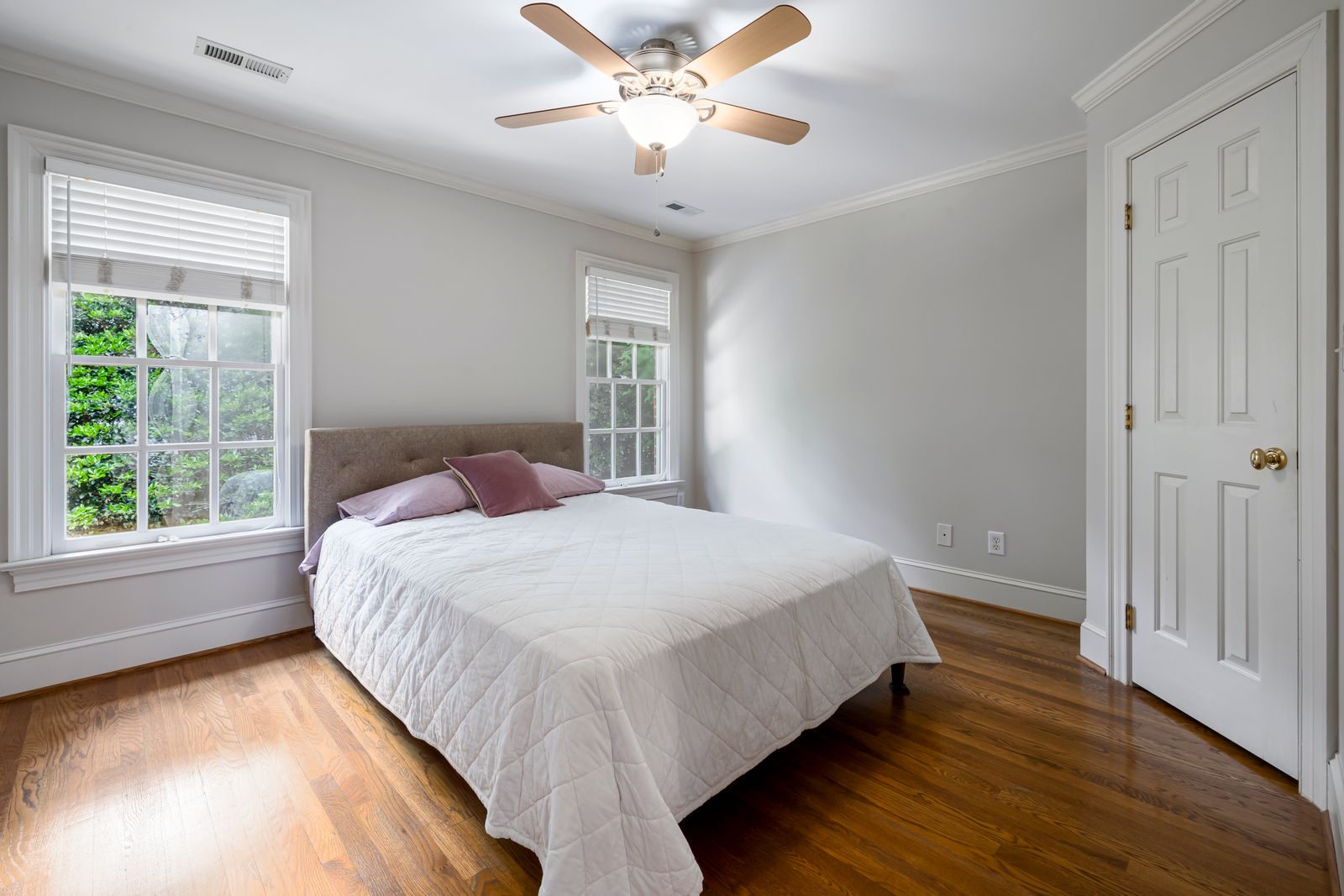
Strip out the motifs and the palette gets quiet, so the room needs texture to stay interesting. Bedding is the biggest surface and the easiest win. Washed linen brings softness and that slightly rumpled finish that suits the climate; the wrinkles are the point. Crisp long-staple cotton delivers the cool, hotel-bed feel, and bamboo-derived fabrics regulate temperature well for hot sleepers. All three breathe, which matters more in Gulf humidity than any thread count.
Underfoot, natural fiber earns its place: jute or seagrass for texture, or a wool blend where bare feet land first thing. Overhead and at the bedside, one woven gesture is enough, whether that is a rattan pendant, a cane headboard, or woven shades. Castle Home’s advice on furniture applies here too: retire the matched distressed-white set with shell drawer pulls, and mix light woods, white oak, and even matte black so the room feels assembled over time. If you are hunting for those pieces locally, our roundup of the best furniture stores in Naples maps where to start.
Light control: the part Florida makes non-negotiable
Here is the Naples-specific reality. NOAA climate normals show this town posts highs in the 80s in every month of the year and reaches 90 degrees or hotter on about 121 days annually. That sun is the reason people move here, and it is also a wake-up call at 6:45 a.m. and a heat load on west-facing glass all afternoon. A coastal bedroom that ignores it is a pretty room that sleeps badly.
The answer is layers. Sheers or light-filtering shades handle the day, keeping the airy quality the style depends on while softening glare. Behind or above them, blackout drapery or shades handle sleep, late mornings, and afternoon rest during the summer months. In white and sand rooms, choose blackout panels in the wall color or a soft neutral so they disappear when open. Lined drapery has a bonus function on west windows: it blunts afternoon heat gain, which the air conditioner will thank you for in August. If your primary bedroom opens to a lanai through sliders, treat that opening as the main event, with full-height panels that stack completely clear of the glass.
Lighting for the hours the sun is off duty
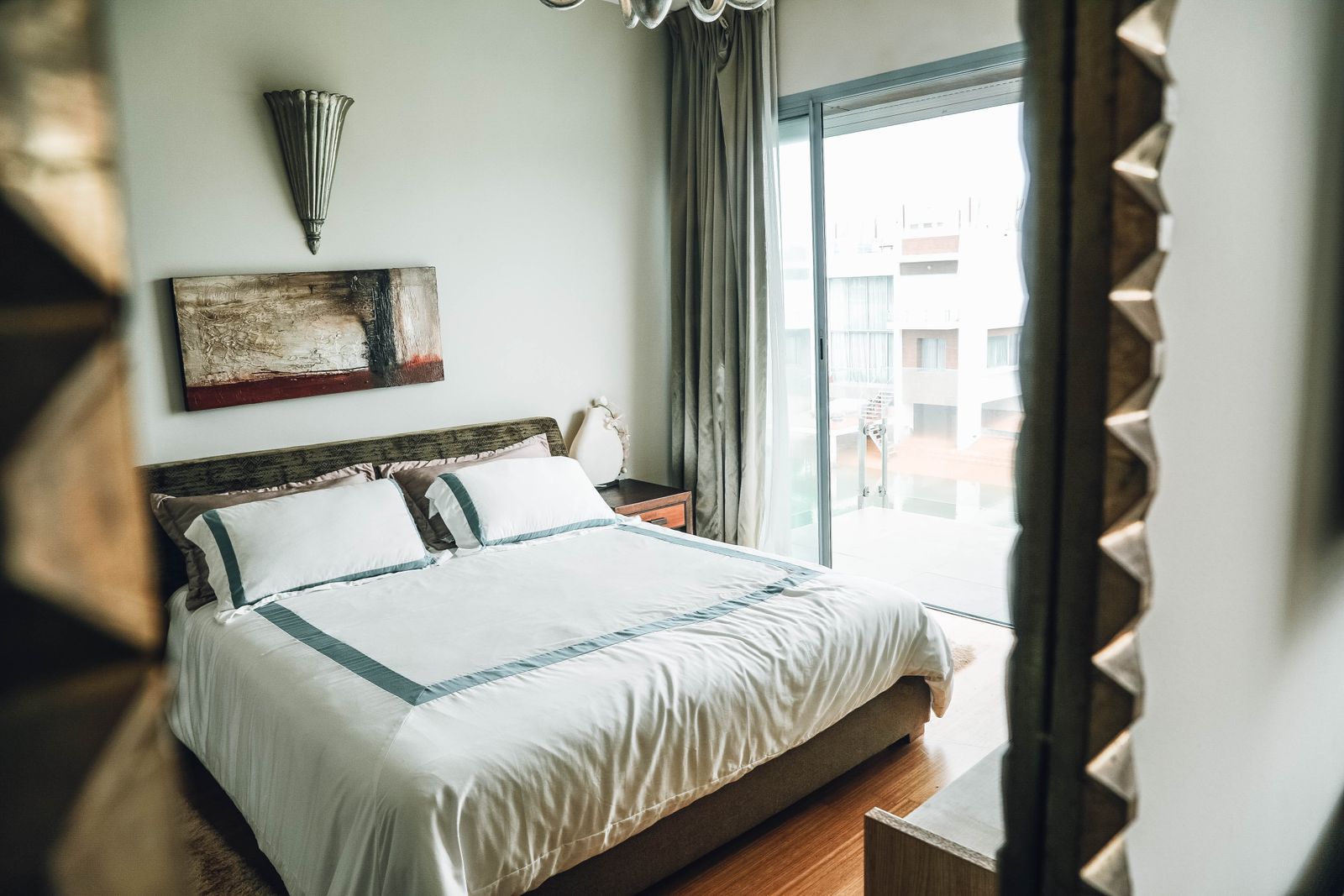
Coastal rooms are designed around daylight, then let down by a single ceiling fixture at night. Castle Home’s guidance is the right instinct: layer table lamps, sconces, or a rattan pendant, use warm-toned bulbs, and put everything on dimmers. In practice, two bedside sources plus one ambient source covers a bedroom. Swing-arm sconces free up nightstand space; a woven pendant adds the textural gesture the room wants anyway. Warm light also keeps the palette honest, since sea-glass greens and clay tones shift muddy under cool-white bulbs.
Edit like you mean it
The last step is subtraction. One piece of art that feels collected, whether an abstract seascape or black-and-white photography, beats a gallery of palm prints. Nightstands hold a lamp, a book, and one object. If a piece exists only to say beach, it goes. What stays is what the style promised in the first place: air, light, texture, and a room that lowers your shoulders when you walk in. That restraint is also what lets the bedroom sit comfortably in the rest of the house, alongside the calmer spaces we profiled in our coastal living room ideas.
Frequently asked questions
How do I make a bedroom feel coastal without beach decor?
Work in materials instead of motifs. Washed linen bedding, a cane or upholstered headboard, mixed light woods, a jute rug, and a warm white wall color will read coastal to anyone who walks in, with nothing nautical in sight. Add one woven light fixture and one piece of quiet art, then stop. The restraint is what makes it feel expensive.
What colors work for a coastal bedroom besides blue?
Sea-glass green, fog gray, latte, soft clay, and blush all read coastal while feeling more current than the blue-and-sand default. Ground any of them in warm whites and sandy neutrals, and vary texture so pale rooms do not fall flat. If you love blue, use it as one saturated gesture, like a headboard or a throw, rather than the whole scheme.
Are blackout curtains worth it in Florida?
Yes, and doubly so on east and west exposures. Naples sun arrives early and stays hot into the evening for most of the year, so blackout drapery or shades protect both sleep and afternoon comfort, and lined panels reduce heat gain through the glass. Layer them behind sheers so the room keeps its light, airy character during the day.